Free Dinosaur Word Searches
Dinosaur Word Searches for Kids
Explore dinosaur vocabulary while practicing letter recognition, spotting familiar words, and noticing how they are spelled. Three difficulty levels let you choose a puzzle that fits your child.
Download free dinosaur word searches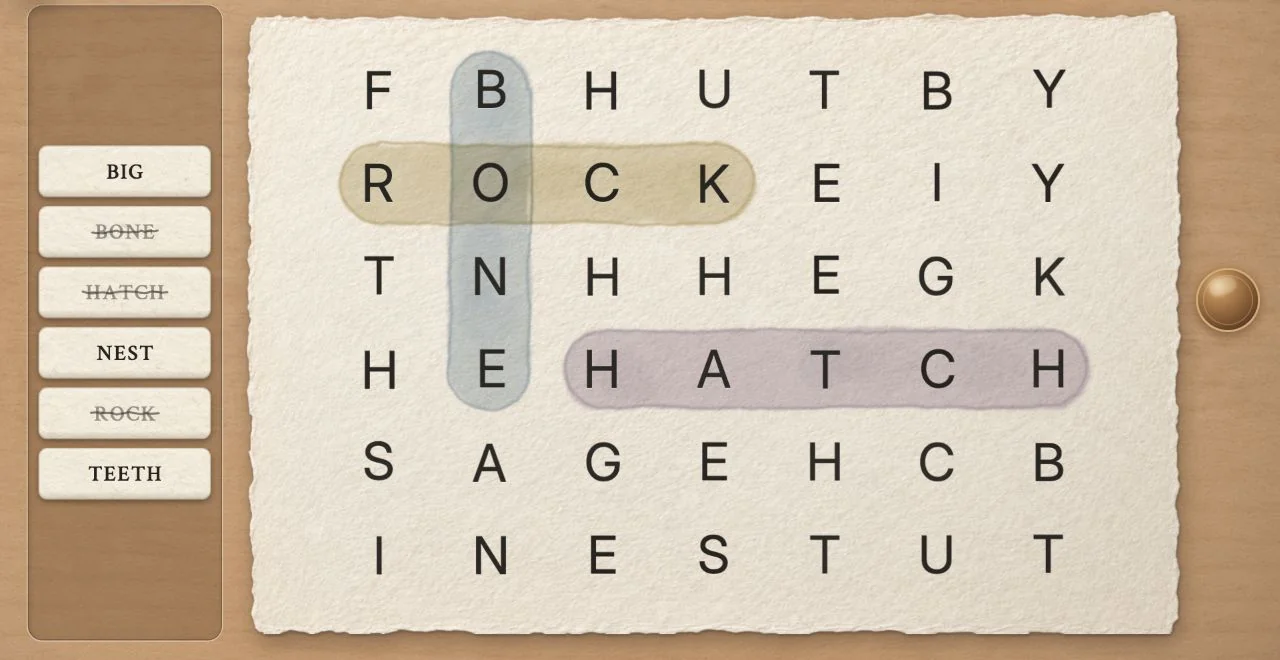
Dinosaur word searches give children practice recognizing letters and words, checking the order of letters in a spelling, and scanning carefully for a match. Talking about the words they find builds vocabulary and connects the puzzle to dinosaur topics such as fossils, body parts, and what dinosaurs ate.
More Than Finding a Word
Explore Dinosaur Words and How They Are Spelled
As children compare the word bank with the grid, they look closely at individual letters, recognize whole words, and check that the letters appear in the right order. Searching one row or column at a time also gives them practice scanning carefully and keeping track of what they have found.
Use the theme to give new words meaning. Talk about what a fossil is, point out a dinosaur’s claws in a picture, or explain that a herbivore eats plants. After finding a word, say it together and try writing it with the word bank covered, then check the spelling.
Print and keep
Get All Three Dinosaur Word Searches
Print three dinosaur word searches—easy, medium, and hard—with matching answer keys.
Begin Together
Find the First Word Together
Read the word bank together before searching, especially the longer dinosaur names. Keep the answer key nearby for a hint.
The easy puzzle uses BONE, CLAW, DIG, DINO, EGG, and ROAR. Say unfamiliar words aloud so your child knows what they are looking for. You can find a few words now and return to the rest later.
Choose one word.
Point to it in the word bank. Say it together and look at the first and last letters.
Search carefully.
Look for the first letter, then follow the complete sequence. A matching first letter is a place to check, not proof that the word is there.
Mark and check.
Circle the word, compare it with the word bank, and cross it off. Use the answer key when you need a hand.
Talk about the discovery.
Ask your child which word they would like to draw or learn more about. You can stop after a few finds and return later.
Words Worth Talking About
What Do the Dinosaur Words Mean?
The medium and hard puzzles include science words your child may not know yet. Pick one or two to talk about as you find them.
- Fossil
- Remains or traces of something that lived long ago. A dinosaur bone can become a fossil; a preserved footprint can be one too.
- Herbivore
- An animal that eats plants. Ask your child what they might put on a plant-eater’s dinner plate.
- Carnivore
- An animal that eats other animals. Compare this word with herbivore: both end in the same letters.
- Paleontologist
- A scientist who studies ancient life through fossils. What might a paleontologist learn from a dinosaur’s teeth?
Your next step
Unlimited Word Searches. And So Much More.
Make unlimited word searches to print, or let your child play word searches in Sage. They can also explore reading, math, stories, music, and more, with teaching that adapts to them. All for less than $1 a day with an annual plan.
Start my free trial →After the Puzzle
Draw a Dinosaur and Label What You Find
After the medium puzzle, draw a dinosaur together and use CLAW, TAIL, and SCALES as labels. Add a CREST if your dinosaur has one. Look for these features in a dinosaur book, then ask your child to point to each one in their drawing.
For a child working on the easy puzzle, start with EGG and CLAW. They can draw a dinosaur hatching from an egg while you write the labels. Read each label together and find the matching word in the puzzle.
Follow Their Curiosity
What Did Dinosaurs Eat? Look at Their Teeth
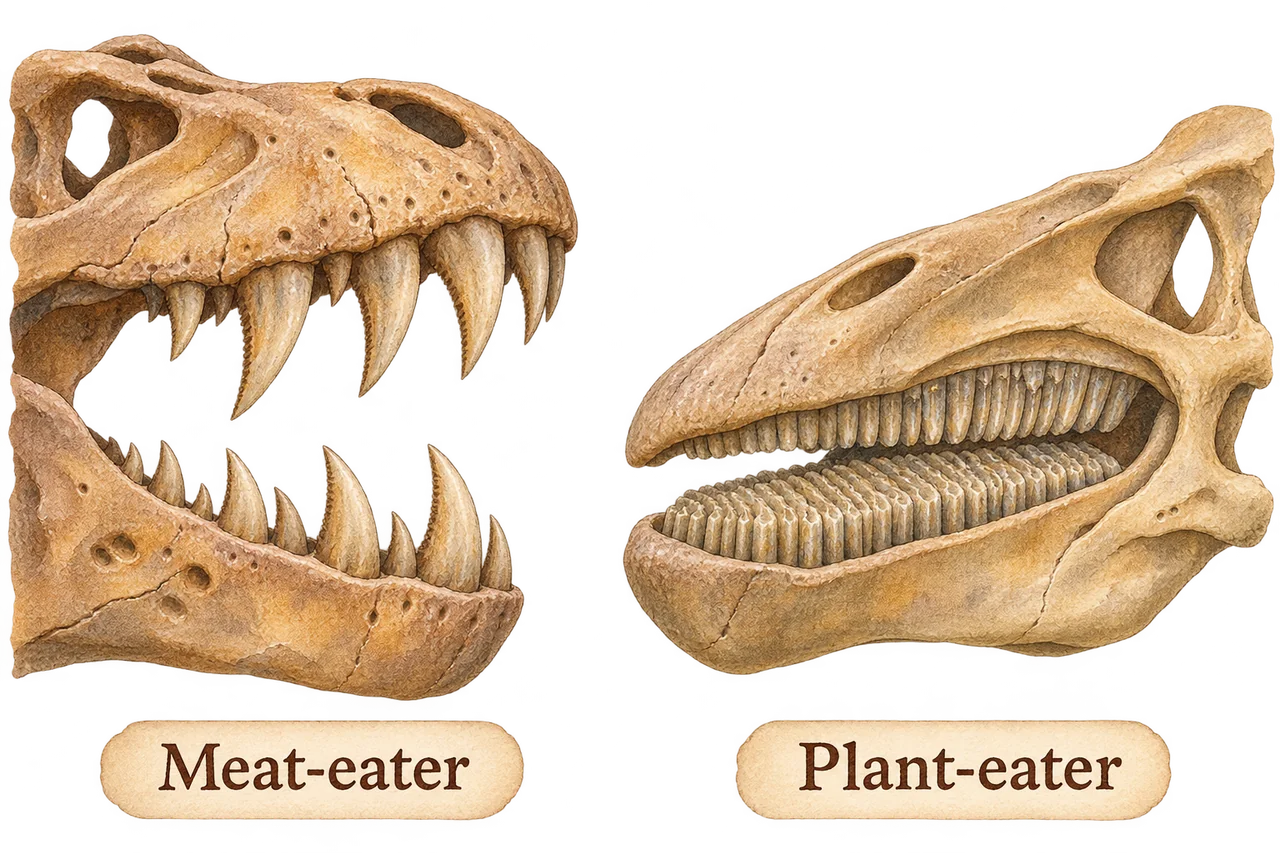
If HERBIVORE and CARNIVORE catch your child’s interest, look at the skull pictures in the American Museum of Natural History’s What Teeth Tell Us activity. Compare pointed teeth with broader grinding surfaces. Tooth shapes give scientists clues about what an animal ate.
Ask, “Which teeth look useful for tearing food? Which could crush or grind it?” Let your child point, describe, or draw what they notice. Then return to the two words in the puzzle and talk about which kind of eater each describes.
A few more answers
Questions parents ask.
Is this dinosaur word search free?
Yes. All three puzzles and their answer keys are free.
Can a kindergartener do this independently?
That depends on the child’s letter knowledge, reading, and familiarity with word searches. Start together. You can read the words aloud and help find them without expecting independent reading of the entire word bank.
What should I do if we cannot find a word?
Use the answer key to locate it, then compare its letters with the word bank together. Helping a child finish one word is more useful than leaving them stuck.
Can I make a harder or easier version?
Yes. The download includes easy, medium, and hard puzzles with matching answer keys in the same PDF. For another topic or a different combination of words and difficulty, make a new puzzle in Creative Studio.
Pick Another Topic
Make Your Own Word Search
Choose a topic, grade, and difficulty in Sage’s free word-search generator. Try a puzzle about dinosaur body parts, plant-eaters, or a favorite dinosaur.
Make two free pages a day.
Make Your Own Word Search →