Early Reading
Kindergarten Sight Words
Which words to practice and how to help them stick, with 100 free sight word flashcards and matching sentences to read together.
Get the Free Practice PackSight words such as was, they, and have need extra recognition practice because their spelling is irregular or includes patterns a child has not learned yet. Introduce a few useful words, revisit them on flashcards, and read them in short sentences.
Know the Difference
Sight Words and High-Frequency Words
High-frequency words appear often in books. Sight words, as we use the term in this guide, need extra attention because a child cannot yet reliably sound them out using familiar spelling patterns.
High frequency describes how often a word appears. Sight-word practice helps a child recognize a word that needs extra attention. The categories overlap: common words such as was, they, and have are often included in sight-word practice.
Where to Start
Start With Books That Repeat a Few Sight Words
Use an early reader designed for beginning readers, such as Bob Books Sight Words: Kindergarten. Look for short sentences that repeat a small set of sight words, so your child gets plenty of chances to recognize the same words.
Introduce two or three of the book’s sight words with flashcards, then read the book together. Read any unfamiliar surrounding words for your child. Reread the book over several short sessions, then try another early reader that uses the same words.
The pack includes 100 flashcards. These eight words are useful examples to look for in a beginner sight-word reader; you do not need to introduce all eight at once.
- was
- are
- have
- they
- this
- what
- do
- with
- Choose books with short, manageable sentences and repeated sight words, rather than a different set of unfamiliar words on every page.
- Use the cards to practice recognition, then let the repeated words in the story give your child more practice.
- When a few words feel familiar, add another small set. Keep returning to earlier words too.
Practice Together
Practice Sight Words With Flashcards and Sentences
Start with two or three sight word flashcards. Show one card, say the word, and have your child say it with you. Then lay out the cards and ask them to find a word you name.
Mix up the cards and invite your child to read each word. If they forget one, say it for them, repeat it together, and return to it after another card. Keep the practice short and encouraging.
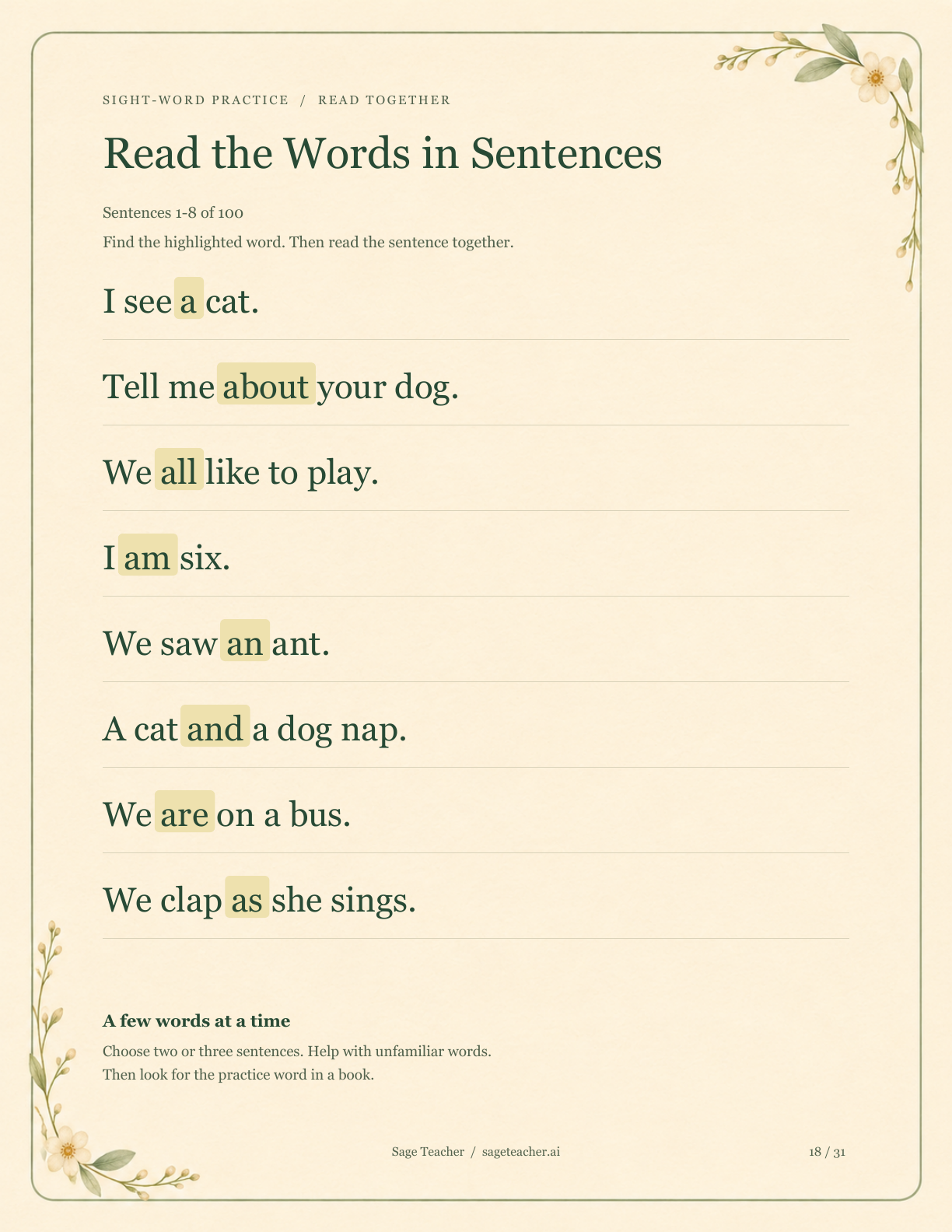
Next, read a short sentence together and ask your child to find the same word. The practice page highlights each sight word to help them spot it. Return to those words in Bob Books or another early reader that repeats them, so your child gets plenty of practice in sentences.
- After practicing with highlights, try a new sentence without them.
- Revisit words in later reading, not only in the same sentence or card order.
- Keep practice brief. Accurate recognition matters more than racing through a stack.
Print and keep
Free Sight Word Flashcards and Sentence Practice
100 sight word flashcards, 100 short practice sentences with the sight word highlighted, and a full word list. The 31-page pack has six cards per sheet; print just the pages you need.
Free download with email sign-in.
A Word List to Keep
100 Words for Sight-Word Practice
This is Fry’s First 100, arranged alphabetically. Often called a sight-word list, it contains high-frequency words with both regular and less familiar spellings. Start with a few words that repeat in a beginner sight-word reader; there is no need to work through all 100 at once.
- a
- about
- all
- am
- an
- and
- are
- as
- at
- be
- been
- but
- by
- called
- can
- come
- could
- day
- did
- do
- down
- each
- find
- first
- for
- from
- get
- go
- had
- has
- have
- he
- her
- him
- his
- how
- I
- if
- in
- into
- is
- it
- its
- like
- long
- look
- made
- make
- many
- may
- more
- my
- no
- not
- now
- number
- of
- on
- one
- or
- other
- out
- part
- people
- said
- see
- she
- so
- some
- than
- that
- the
- their
- them
- then
- there
- these
- they
- this
- time
- to
- two
- up
- use
- was
- water
- way
- we
- were
- what
- when
- which
- who
- will
- with
- words
- would
- write
- you
- your
Learning With Sage
Reading Practice With a Teacher Who Helps
Sage helps children learn to read through guided activities, spoken support, and practice that responds to them. Your child can hear a word, find it among choices, and try reading it aloud with help when needed.
When a child struggles, Sage can make the support more explicit and return to simpler work. Across sessions, it uses learning history to choose what comes next. The aim is understanding and confident reading, not simply finishing more activities.

A few more answers
Questions parents ask.
Which sight words should I teach first?
Start with two or three words from a beginner sight-word reader, such as Bob Books Sight Words: Kindergarten. Choose a book that repeats those words in short sentences. Introduce them on cards, read the book together, and revisit it over several short sessions before adding more words.
Are Dolch and Fry lists sight-word lists?
They are lists of high-frequency words and are often called sight-word lists. They include both words with regular spellings and words that need extra attention. Use a beginner sight-word reader that repeats a few of these words to give practice a manageable focus.
What if my child forgets a sight word?
Say the word for them and invite them to repeat it. Mix it with one or two familiar cards, then come back to it. Read a short sentence containing the same word together, and revisit it in another brief practice session.
What if my child knows the card but misses the word in a book?
Point out the same word in a short sentence and read it together. Change the sentence and revisit it later. Reading words on cards and recognizing them in text both need practice.
Should we use pictures to guess a word?
Use pictures to talk about the story, but point to the printed word when practicing recognition. If your child does not know it, say the word and read the sentence together rather than asking them to guess from the picture.
Your next step
Help Your Child Become a More Confident Reader
Sage teaches, listens, and adjusts the help as your child learns. Try guided reading practice in a calm space built for children ages 4–8.
Start my free trial →