First Reading Experiences
Pre-K Sight Words
40 sight word flashcards, simple sentences, and playful ways to help your child recognize a few words at a time.
Get the Free Pre-K Practice PackPre-K sight-word practice can begin with two or three words, such as I, the, or you. Say each word together, find it on a card, and meet it again in a short sentence. The 40-word Dolch pre-primer list below is a useful reference; it is not a requirement to finish before kindergarten.
Keep It Small
Introduce a Few Words Together
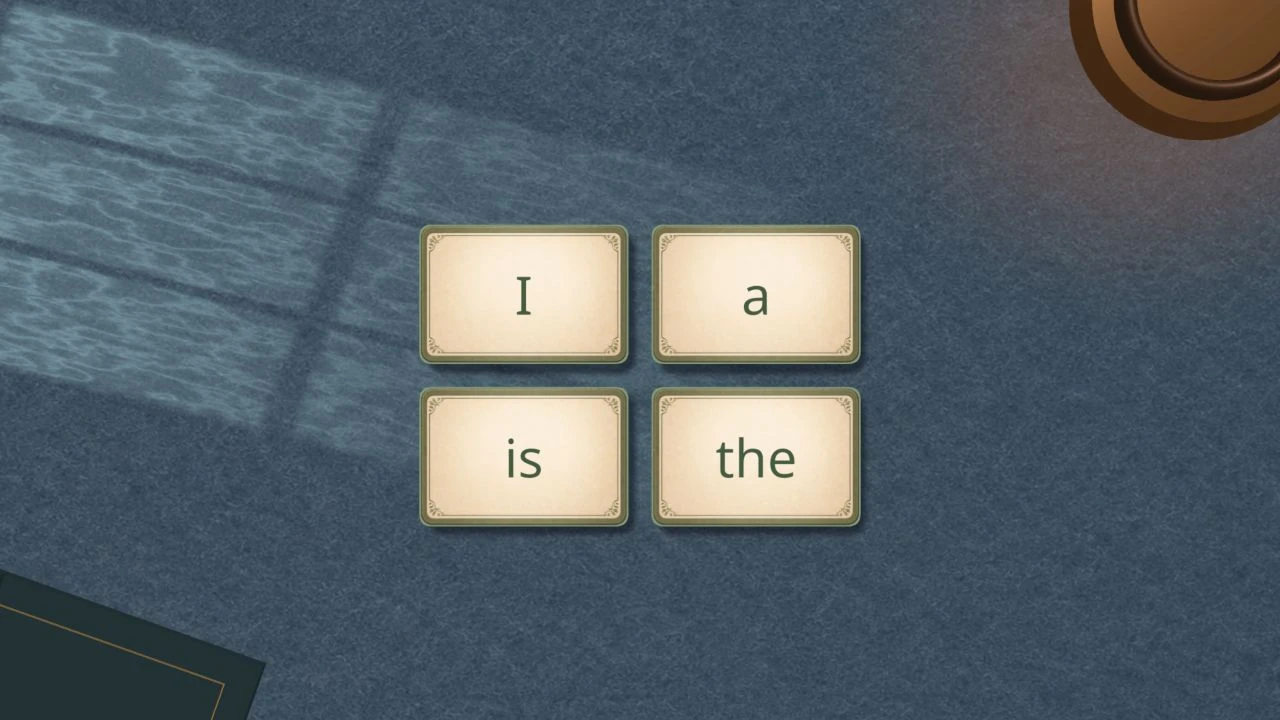
If your child is curious about the words in books, try a short word-finding game. Put two cards on the table, say each word, and invite your child to point to the one you name. Let them hear and say the words with you before asking them to remember.
Choose a couple of words that repeat in a very simple early reader. Words such as I, see, and the can be useful when they appear in that book. The six cards here are examples from the pack, not a required starting order.
If your child would rather listen to a story, read aloud together and come back to the cards another day. Enjoying books and noticing print are worthwhile parts of early reading too.
- I
- the
- you
- see
- my
- we
Play and Repeat
Find a Word. Say It. Read Together.
Show a sight word flashcard and say the word together. Place it beside one other card, then ask your child to find it. Switch the cards around so they look at the word rather than remember its position.
Read one short practice sentence aloud, pointing to the words as you go. Invite your child to join in on the sight word they recognize. You can read the rest of the sentence for them.
Return to the same few words in another short session. When those feel familiar, add another word while keeping some familiar ones in the mix.
- Let your child be the teacher: they can hand you a card to read.
- If a word is forgotten, say it together and try again later.
- Stop while the activity still feels enjoyable.
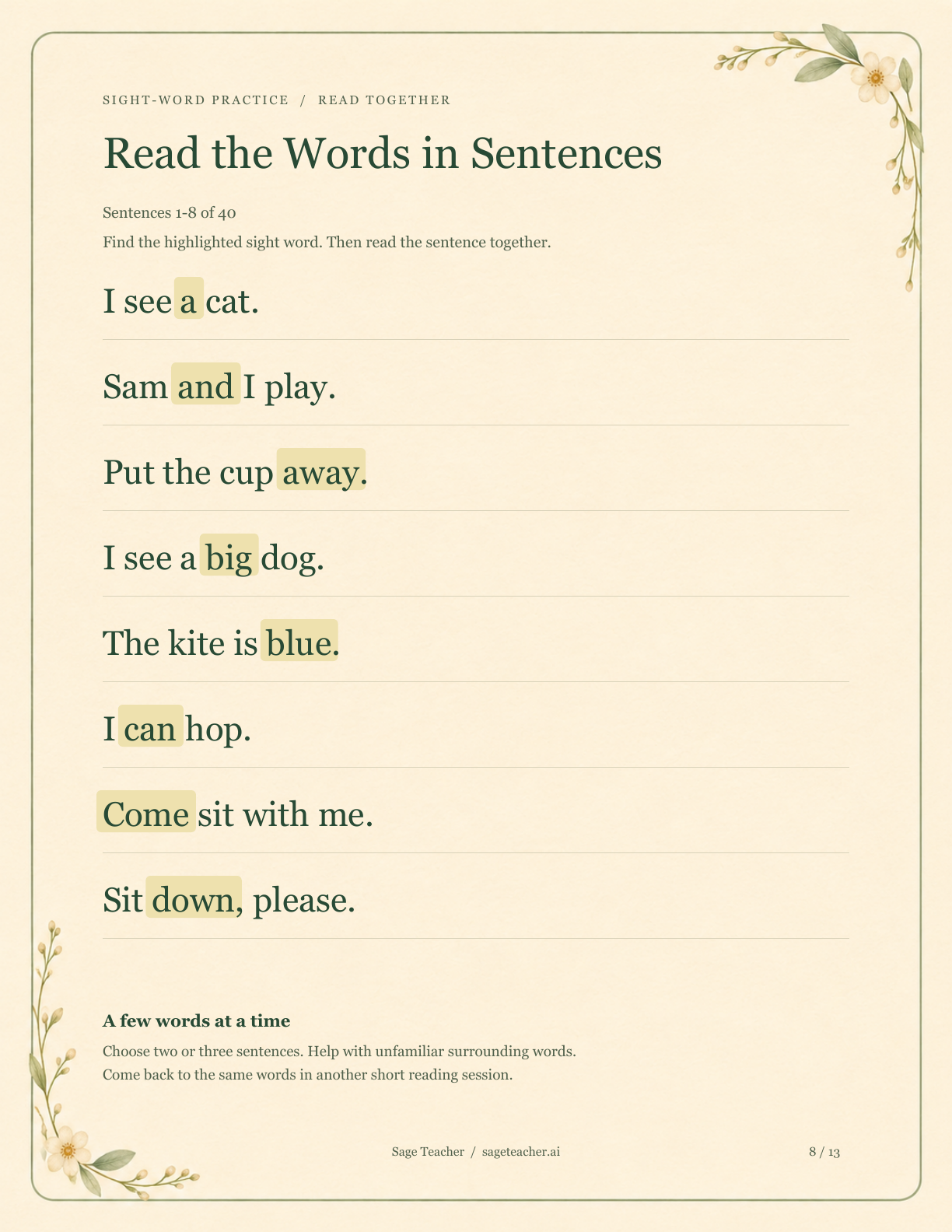
Print and keep
Free Pre-K Sight Word Flashcards and Sentences
40 sight word flashcards, 40 short practice sentences, and the complete Dolch pre-primer word list. The 13-page pack has six cards per sheet. Print a few pages and read together.
Free download with email sign-in.
Meet the Words Again
Choose Short Books With Repeated Words
Look for an early reader that uses a small set of words again and again. Introduce a few of those words on cards, then read the book together and let your child find them in the story.
Bob Books Sight Words: Kindergarten is one option for children who have begun reading simple words. For a child who is not there yet, choose read-aloud books or the earlier Bob Books stages. Follow your child’s starting point rather than the grade printed on the box.
The Full List
40 Pre-K Sight Words
This is the Dolch pre-primer list, often labeled Pre-K, arranged alphabetically. Like other classroom sight-word lists, it includes high-frequency words with both regular and less familiar spellings. Select a few for practice rather than introducing the whole list at once.
- a
- and
- away
- big
- blue
- can
- come
- down
- find
- for
- funny
- go
- help
- here
- I
- in
- is
- it
- jump
- little
- look
- make
- me
- my
- not
- one
- play
- red
- run
- said
- see
- the
- three
- to
- two
- up
- we
- where
- yellow
- you
Learning With Sage
A Patient Teacher for Early Reading
For children ages 4–8, Sage turns early reading into guided practice. Your child can hear a word, find it among choices, and get help from the teacher when they are unsure.
Sage responds to how your child is doing, with more support or simpler activities when needed. It also uses learning history to guide what comes next, so practice can grow with your child.
A few more answers
Questions parents ask.
How many sight words should a preschooler know?
There is no single word count for every preschooler. Use this 40-word Dolch pre-primer list to choose a few practice words, not as a kindergarten-entry checklist. Follow your child’s interest and progress.
Can a three-year-old use these sight word flashcards?
An interested child can join an adult for a simple point-and-find game. Independent reading is not required. If cards are frustrating or uninteresting, choose a shared story instead and try word practice another time.
Which pre-k sight words should we start with?
Choose two or three words that repeat in a simple early reader. Words such as I, the, and you are examples from the list. Introduce them together, then help your child find them on cards and in the book.
Are pre-k sight words different from kindergarten sight words?
The lists overlap, and publishers and classrooms organize them differently. This page uses the 40-word Dolch pre-primer list. Our kindergarten page offers the broader Fry First 100 reference and a different practice pack.
Should we use pictures to guess the word?
Use pictures to enjoy and talk about the story. For the word-finding activity, point to the printed word. If your child does not recognize it, say it together rather than asking them to guess from the picture.
Your next step
Give Those First Words a Patient Teacher
Sage guides children ages 4–8 through reading practice with help that responds to them. Try a calmer way to build confidence with words.
Start my free trial →